• Skip to main content
  • Skip to footer

Immigration Law of Montana

Christopher J. Flann, Attorney

406-373-9828
  • Make an Appointment
  • Client Log In
  • Home

Immigration Law of Montana

  • About
    • Christopher Flann, Attorney
    • Collette Layton, Legal Assistant
    • Rockwell “Rock” Hinkle, Legal Assistant
    • ILM Scholarships
    • Reviews and Testimonials
    • Gabriela Veroes Legal Assistant
    • Maryangel Aguilera Legal Assistant
    • Fidel Villegas, Legal Assistant
    • Gabriel Chávez, Legal Assistant
    • Erwin Noguera, Legal Assistant
  • US Citizenship
    • Citizenship through Adoption
    • Citizenship through Naturalization
    • Citizenship through Military
    • Derivative US Citizenship
  • Green Cards
    • Adjustment of Status
    • Asylee Green Card
    • Conditional Green Card Renewal
    • Employment Based Green Card
    • Consular Processing
    • Family Based Green Card
    • Green Card for Religious Worker
    • Green Card through Marriage
    • Green Card through Refugee or Asylee Status
    • Parole in Place Green Card
    • Green Card Renewal
    • Humanitarian Green Card
    • Refugee Green Card
    • Sheepherder Green Card
    • Marrying an Illegal Immigrant
    • For American Indians Born in Canada
    • Special Immigrant Visa
    • When Your LPR Spouse Dies
    • When Your USC Spouse Dies
    • Derivative Beneficiaries When Petitioners Die
  • Immigration Guides
    • Immigration for Employers
    • Immigration for Investors
    • Immigration for Farmers and Ranchers
    • Immigration for Religious Organizations
  • US Visas
    • E-1 Visa Treaty Trader Montana North Dakota Wyoming
    • E-2 Visa Treaty Investor Montana Wyoming North Dakota
    • H-1B Visa Montana North Dakota Wyoming
    • E-3 Visa Montana North Dakota Wyoming
    • H-2A Visa Montana North Dakota Wyoming
    • H-2B Visa Montana North Dakota Wyoming
    • H-3 Visa Montana North Dakota Wyoming
    • K-1 Fiancé Visa Montana North Dakota Wyoming
    • K-3 Spouse Visa Montana North Dakota Wyoming
    • O-1 Visa for Artists, Scientists, Educators, Businesspeople and Athletes
    • P-3 Visa Montana North Dakota Wyoming
    • R-1 Visa Montana North Dakota Wyoming
    • TN Visa Montana North Dakota Wyoming
    • U Visa Montana North Dakota Wyoming
    • Change of Status: Montana, North Dakota, Wyoming
    • Visa Extension Extension of Stay
    • Process for US Visa Application Through Admission and Stay
    • Entry into United States
    • I-94 Admission Record
    • Volunteer Visa USA
    • Humanitarian Parole
    • Leaving the United States
  • Immigration Services
    • RFE Response Help in Montana: When Immigration Requests Can Be Fixed (And When They Can’t)
    • Apostille Services
    • Document Translation Services
    • Illegal Immigrant Arrested in Montana
    • Why A Strategy Consultation
  • Removal Defense
  • Service Area
    • Immigration Lawyer North Dakota
    • Immigration Lawyer Wyoming
  • Contact
  • Blog
  • English
    • Español
You are here: Home / Category Blog Page

Category Blog Page

Divorced? You Can Still Get an I-751 Waiver and Keep Your Green Card — Here’s How

June 6, 2025 by Admin-ILM

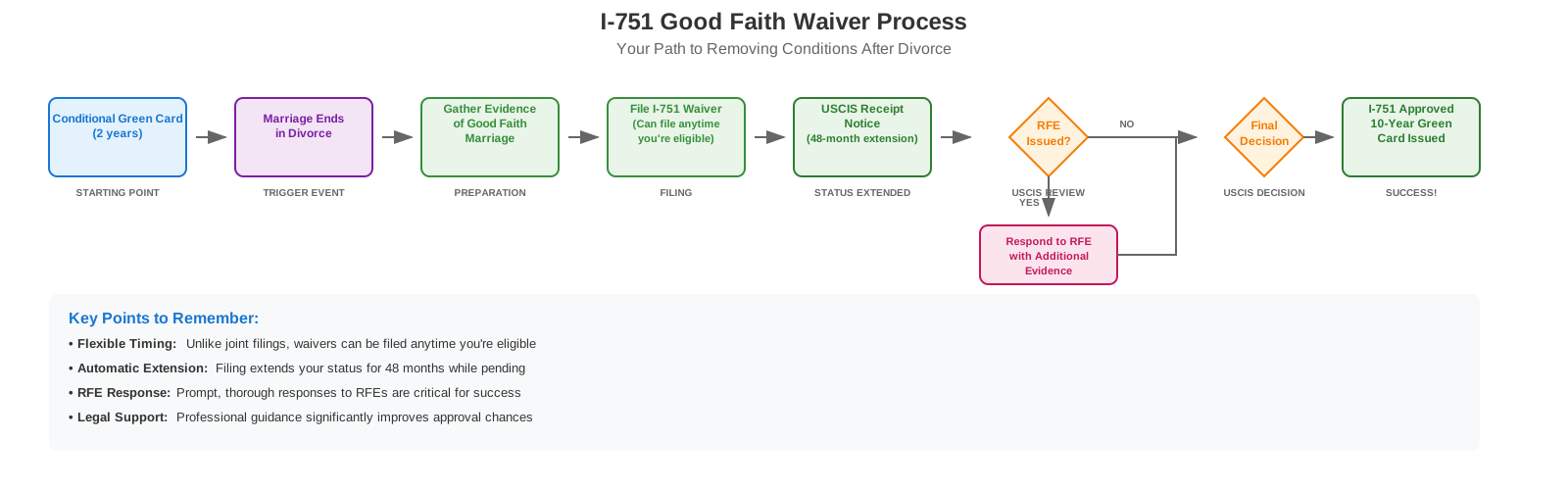
If your marriage to a U.S. citizen ended in divorce before you could jointly file Form I-751, you may still qualify to remove conditions on your green card. With the right evidence, a good-faith I-751 waiver can help you move forward legally and confidently.

In this guide, we’ll explain what a good faith waiver is, how to prove your case, what to expect from USCIS, including potential Request for Evidence (RFE) notices, and how legal guidance can make a difference.

Current Processing Times & Updates (as of August 2025)

As of August 2025, USCIS processing times for I-751 petitions vary by service center but typically range from 18-33 months. However, processing times change frequently, so check the current USCIS processing times for your specific service center before filing. 

Recent USCIS policy clarifications have reinforced that good faith waiver applicants have greater filing flexibility than joint filers, making it even more important to understand your options if divorce occurs during your conditional period.

What Is a Good Faith I-751 Waiver?

A Good Faith I-751 Waiver is not a separate form—it is a type of request made within Form I-751, the petition used to remove the conditions on a 2-year marriage-based green card. Normally, this form is filed jointly by both spouses. However, if you’re divorced, you can file it alone by requesting a waiver of the joint filing requirement. You do this by checking the box on Form I-751 that states your marriage was entered into in good faith but ended in divorce or annulment.

This waiver tells USCIS that your marriage was real and not just for immigration purposes, even though it didn’t last. You must include strong evidence to support the authenticity of the relationship.

This waiver could be used for conditional permanent residents who:

  • Received a 2-year conditional green card through marriage to a U.S. citizen, and
  • Divorced during these 2 years.

Under 8 CFR § 1216.5(a)(1)(ii), USCIS allows individuals to file alone if:

“The marriage was entered into in good faith by the conditional resident alien, but the marriage was terminated…”

In short, your marriage must have been real, not for immigration purposes, even if it ended in divorce.

How to Prove Good Faith in an I-751 Waiver Petition

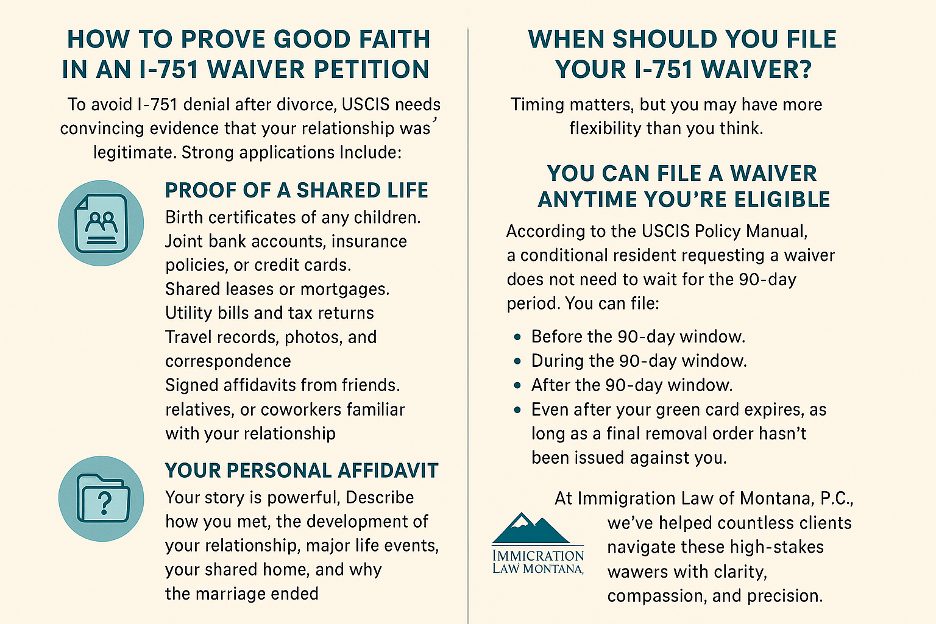
To avoid I-751 denial after divorce, USCIS needs convincing evidence that your relationship was legitimate. Strong applications include:

  1. Proof of a Shared Life

Birth certificates of any children.

Joint bank accounts, insurance policies, or credit cards.

Shared leases or mortgages.

Utility bills and tax returns.

Travel records, photos, and correspondence.

Signed affidavits from friends, relatives, or coworkers familiar with your relationship.

  1. Your Personal Affidavit

Your story is powerful. Describe how you met, the development of your relationship, major life events, your shared home, and why the marriage ended. USCIS pays close attention to this personal narrative, especially when other documentation is limited.

  1. Explaining Missing Evidence

If your spouse was uncooperative or controlled access to records, include a detailed explanation. USCIS understands real-life complications, particularly in difficult or imbalanced relationships.

When Should You File Your I-751 Waiver?

Timing matters, but you may have more flexibility than you think.

For joint petitions, Form I-751 must be filed within the 90-day window before the second anniversary of receiving conditional permanent resident (CPR) status. This is when both spouses typically submit the petition together.

But if you’re applying for a good-faith waiver after divorce, the rules are different, and potentially in your favor.

You Can File a Waiver Anytime You’re Eligible

According to the USCIS Policy Manual, a conditional resident requesting a waiver does not need to wait for the 90-day period. You can file:

  • Before the 90-day window.
  • During the 90-day window.
  • After the 90-day window.
  • Even after your green card expires, as long as a final removal order hasn’t been issued against you.

If you are already in removal proceedings, you can still file the waiver, but only before the immigration judge issues a final order. This creates a critical time-sensitive situation where immediate legal action is essential. In removal proceedings, your I-751 waiver can serve as a defense against removal, but the immigration court process operates on a different timeline than USCIS administrative processing. An experienced immigration attorney can help coordinate your waiver filing with your removal defense strategy to maximize your chances of success.This means once the immigration judge issues a final removal order, the opportunity to file the waiver ends, and alternative legal strategies must be considered. That’s why it’s so important to act fast and work with an experienced immigration attorney who can protect your status in time.

What Happens If You Receive a Request for Evidence (RFE)?

It’s common for applicants to receive an RFE, asking for more information. But it’s also a critical moment: one misstep could cost you your green card.

An RFE means USCIS needs additional proof before making a final decision. Typical reasons for an I-751 RFE include:

  • Insufficient documentation
  • Gaps in the timeline of your relationship
  • Missing or unclear personal statements
  • Conflicting details in affidavits or records


Responding promptly and thoroughly is crucial. A strong legal team can help you analyze the RFE, gather the right evidence, and prepare a detailed response that resolves USCIS concerns.

Does Filing a Waiver Extend Your Legal Status?

Yes. USCIS automatically extends your conditional green card for 48 months (4 years) when you properly file Form I-751. This means:

  • You remain authorized to work.
  • You can legally live in the U.S.
  • You can continue your life without fear of falling out of status.

This extension applies while your petition is under review, even if your green card has technically expired. It gives you valuable peace of mind while your case is being processed.

Can You Travel Abroad While Your I-751 Waiver Is Pending?

Yes, but with caution. If you have properly filed Form I-751 and received your receipt notice (Form I-797) confirming the 48-month automatic extension of your conditional green card, you are generally allowed to travel internationally and re-enter the U.S.

However, travel is not recommended if:

  • You’re in removal proceedings.
  • Your conditional green card has already expired, and you don’t have your receipt notice or extension letter in hand.
  • You have other unresolved immigration issues.

You must carry your expired green card and the I-751 receipt notice when traveling to prove your extended lawful status. But because travel during this process can be risky, especially if you’re awaiting a decision or in removal proceedings, it’s strongly advised to consult an immigration attorney before leaving the U.S.

Why Legal Support Is Key?

Filing a good-faith I-751 waiver is more than just paperwork—it’s telling your truth in a way that USCIS can understand and trust. Any mistake, inconsistency, or missed deadline can lead to denial or removal proceedings before an Immigration Judge.

At Immigration Law of Montana, P.C., we’ve helped countless clients navigate these high-stakes waivers with clarity, compassion, and precision.

Just because your marriage ended doesn’t mean your green card has to. If your relationship was sincere and your story is told clearly, you can still secure your future in the United States. Let our experienced legal team help you prepare your I-751 petition.

By Gabriela Veroes, Legal Assistant at Immigration Law of Montana, P.C.
Filed Under: Blog

Green Card for Spouse: A Complete Guide

November 11, 2018 by Admin-ILM

Getting a green card for your spouse remains one of the most common immigration pathways in the United States. Nearly 40% of all family-based green cards are issued to spouses each year, making this process crucial for hundreds of thousands of couples. However, significant changes in 2025 have made the process more complex and scrutinized than ever before.

After 28+ years of practicing immigration law, I’ve guided countless couples through this journey. The fundamentals remain the same, but the details—and the stakes—have changed considerably. Here’s what you need to know about getting a green card for your spouse in 2025.

What’s Changed in 2025: Key Updates

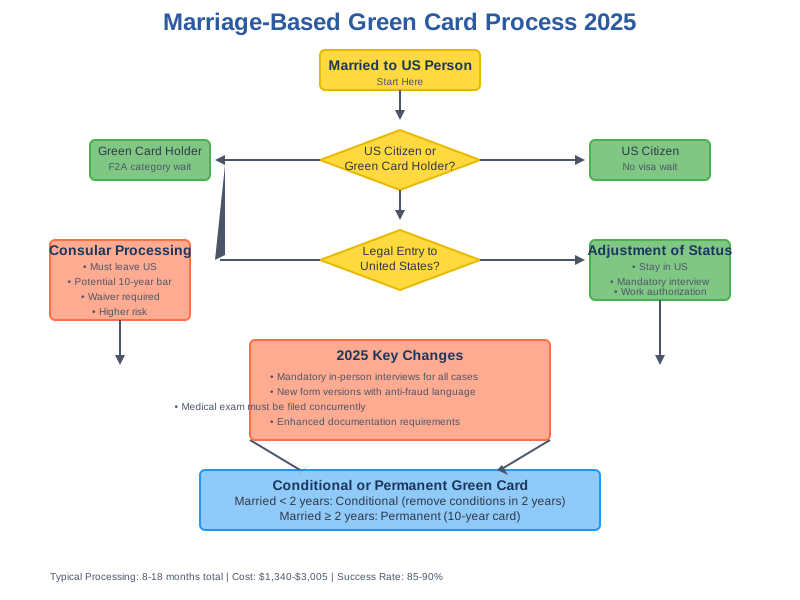
The most significant change is the reinstatement of mandatory in-person interviews for marriage-based green card applications. USCIS has implemented this requirement as part of a comprehensive anti-fraud initiative, recognizing that marriage fraud has become increasingly sophisticated.

Additionally, USCIS has updated critical forms and procedures:

  • New Form Requirements: Updated versions of Forms I-130, I-485, and I-129F with stricter formatting and anti-fraud language
  • Concurrent Medical Exam Filing: Form I-693 must now be submitted with your initial application packet
  • Enhanced Documentation Standards: Higher evidence thresholds for proving bona fide marriages
  • Stricter Payment Rules: Separate payments required for each form—no combined payments accepted

These changes reflect a zero-tolerance approach to marriage fraud while maintaining pathways for legitimate couples.

Understanding Your Situation: Which Process Applies?

US Citizen Marrying a Foreign National

If you’re a US citizen married to someone who entered the country legally, you have the most straightforward path. Your spouse may be eligible for adjustment of status, allowing them to get their green card without leaving the United States.

Key advantages:

  • No annual visa number limitations
  • Faster processing (typically 8-13 months)
  • Spouse can remain in the US during processing
  • Work authorization available while case is pending

Lawful Permanent Resident (Green Card Holder) Marrying a Foreign National

This scenario involves additional complexity. Spouses of green card holders fall under the F2A preference category, which means:

  • Visa number limitations apply – currently over 1.17 million approved petitions are waiting for visa availability
  • Longer wait times – particularly for applicants from high-demand countries like Mexico, India, China, and the Philippines
  • Two-step process – first the petition approval, then waiting for visa availability

When Your Spouse Entered Without Inspection

If your spouse entered the United States illegally, they cannot adjust status here, regardless of your marriage. They must use consular processing, which creates additional challenges:

  • Mandatory departure from the US for consular interview
  • Potential 10-year bar if they’ve been unlawfully present for over one year
  • Waiver requirements – typically the I-601A provisional waiver before departure

This scenario requires careful planning and often involves significant risk.


The Process: Step-by-Step for 2025

Step 1: File Form I-130 Petition

The US citizen or permanent resident spouse files Form I-130 to establish the qualifying relationship. Under 2025 requirements:

  • Must use the current form edition (check USCIS website for latest version)
  • Include comprehensive evidence of bona fide marriage
  • Pay separate filing fee (currently $675)
  • Expect enhanced scrutiny of supporting documentation

Step 2: Determine Your Path

For Adjustment of Status (if spouse is in the US legally):

  • File Form I-485 concurrently or after I-130 approval
  • Include Form I-693 medical examination (mandatory concurrent filing)
  • Apply for work authorization (Form I-765) and travel document (Form I-131) if desired

For Consular Processing (if spouse is outside the US or entered illegally):

  • Wait for National Visa Center processing after I-130 approval
  • Complete DS-260 online application
  • Attend consular interview in spouse’s home country

Step 3: Prepare for Mandatory Interview

All marriage-based applications now require in-person interviews. This represents a return to pre-2017 procedures and reflects USCIS’s commitment to fraud detection.

Interview preparation essentials:

  • Comprehensive documentation of your relationship timeline
  • Joint financial records, lease agreements, insurance policies
  • Photos spanning your relationship
  • Affidavits from family and friends
  • Detailed knowledge of each other’s background, family, and daily routines

Step 4: Conditional vs. Permanent Status

If you’ve been married less than two years when the green card is issued, your spouse receives a conditional green card valid for two years. You must file Form I-751 to remove conditions before the card expires.

Marriages of two years or more at the time of green card issuance receive immediate 10-year permanent resident cards.

Common Challenges and How to Address Them

Large Age Differences

Significant age gaps between spouses trigger additional scrutiny. Document your relationship’s development thoroughly, including how you met, courtship timeline, and shared life goals.

Different Cultural or Language Backgrounds

USCIS recognizes legitimate international marriages but looks for evidence of genuine communication and shared experiences. Translation services, travel records, and cultural integration efforts strengthen your case.

Previous Immigration Violations

Prior overstays, visa violations, or removal proceedings don’t automatically disqualify you, but they require careful legal analysis. Waivers may be available, but timing and strategy are crucial.

Military Families

Military spouses may qualify for Parole in Place, which can cure unlawful entry and allow adjustment of status in the United States. This discretionary benefit requires strong evidence of hardship and military service.

Financial Requirements: Affidavit of Support

The US citizen or permanent resident must file Form I-864, proving they can financially support their spouse at 125% of the federal poverty guidelines. Current minimums for 2025:

  • Household of 2: $26,200 annual income
  • Household of 3: $33,000 annual income
  • Additional persons: Add $6,800 per person

If you don’t meet income requirements, joint sponsors or asset-based calculations may be available.

Processing Times and Costs

Current processing times (as of 2025):

  • Form I-130: 10-15 months
  • Form I-485 (adjustment): 8-13 months
  • Consular processing: 12-18 months total

Total costs:

  • Adjustment of status: Approximately $3,005
  • Consular processing: Approximately $1,340
  • Legal fees vary but typically range from $2,500-$5,000

Red Flags That Trigger Additional Scrutiny

Based on my experience, certain factors consistently result in enhanced review:

  • Short courtship periods before marriage
  • Limited shared residence history
  • Significant financial disparities between spouses
  • Previous marriage-based petitions by either party
  • Inconsistent statements in forms or interviews
  • Lack of commingled finances or shared obligations

Why Professional Help Matters

The 2025 changes have made marriage-based green card cases significantly more complex. What used to be straightforward paperwork now requires strategic planning, comprehensive documentation, and careful preparation for mandatory interviews.

In my 28+ years of practice, I’ve seen how small mistakes can derail cases and create years of delays. The current environment demands precision and expertise to navigate successfully.

State-Specific Considerations for Montana, North Dakota, and Wyoming

Our regional location creates unique advantages:

  • Lower case volumes often mean faster processing at local USCIS offices
  • Experienced local officers who understand our agricultural and energy industry employment patterns
  • Reasonable travel distances to interview locations in Helena or Denver
  • Strong community ties that support evidence of bona fide marriages

Next Steps: Getting Started

If you’re ready to begin the green card process for your spouse, here’s what I recommend:

  1. Gather comprehensive relationship documentation – start this process early
  2. Assess any potential complications – prior immigration violations, criminal history, or complex family situations
  3. Develop a strategic timeline – coordinate work authorization, travel needs, and family planning
  4. Prepare financially – budget for government fees, legal costs, and potential travel expenses

The marriage-based green card process has become more challenging in 2025, but it remains a reliable path to permanent residence for genuine couples. With proper preparation, comprehensive documentation, and experienced legal guidance, you can successfully navigate this process.

Success in this area requires both knowledge of current law and practical experience with USCIS procedures. After nearly three decades of practice, I’ve developed the insights and strategies that make the difference between approval and denial.

Ready to start your spouse’s green card process? Contact our office to schedule a consultation and learn how we can help you navigate the 2025 requirements successfully.

Filed Under: Blog

How to Keep Your Green Card: Essential Requirements for Montana Residents

November 11, 2018 by Admin-ILM

Maintaining your lawful permanent resident (LPR) status requires understanding specific rules and avoiding common pitfalls that lead to abandonment. As Montana’s most experienced immigration attorney with 28+ years of practice, I’ve helped countless clients navigate these requirements and resolve LPR status challenges.

Understanding Green Card Maintenance: The Basics

Once you receive your green card, maintaining your status is just as important as obtaining it. The Department of Homeland Security (DHS) can challenge your LPR status if you fail to meet ongoing requirements, with abandonment being the most common reason for status loss.

Key Maintenance Requirements

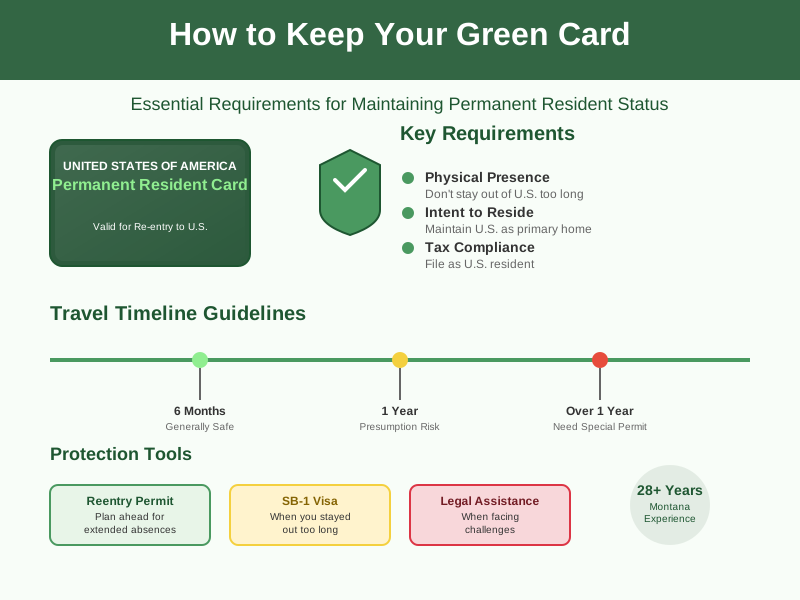
Physical Presence: You cannot remain outside the United States for extended periods without proper documentation. Absences over 180 days but less than one year create a presumption of abandonment that you must overcome with evidence.

Intent to Reside: You must maintain the United States as your primary place of residence. This means keeping significant ties to the U.S., including housing, employment, family connections, and financial accounts.

Tax Compliance: Green card holders must file U.S. tax returns as residents, reporting worldwide income. Filing as a “nonresident alien” can trigger abandonment proceedings, as it indicates intent to reside elsewhere.

Criminal Record: Certain criminal convictions can result in removal proceedings and loss of LPR status.


Recent USCIS Changes Affecting Green Card Holders (2024-2025)

Extended Validity for Renewal Applications

As of September 2024, USCIS automatically extends green card validity to 36 months (increased from 24 months) for properly filed Form I-90 renewal applications. This provides better protection for LPRs facing processing delays.

Stricter Form Requirements

USCIS has tightened requirements for immigration forms, including:

  • Separate payments for each form (no combined payments accepted)
  • Clear processing type selections
  • Enhanced documentation requirements

Travel and Absence Guidelines

Safe Travel Periods

  • Under 6 months: Generally safe with proper documentation
  • 6 months to 1 year: Creates presumption of abandonment (rebuttable)
  • Over 1 year: Requires reentry permit or returning resident visa

Protecting Your Status During Extended Travel

Reentry Permits (Form I-131)

  • Must apply while physically present in the U.S.
  • Valid for up to 2 years
  • Provides strong evidence of intent to maintain residence
  • Essential for planned absences over 6 months

Returning Resident Visas (SB-1)

  • For LPRs who stayed abroad longer than intended
  • Requires proof that extended absence was beyond your control
  • Must demonstrate continuous ties to the United States
  • Available at U.S. consulates abroad

Tax Issues That Can Affect Your Green Card Status

Important Note: Our firm focuses exclusively on immigration law. While we can identify potential tax issues that may affect your immigration status, we do not provide tax advice. For all tax-related questions, consult a qualified tax professional.

How Tax Filing Can Impact Immigration Status

From an immigration perspective, certain tax filing patterns can create problems for green card holders:

  • Filing as a “nonresident alien” may indicate to USCIS that you consider yourself a resident of another country
  • Failure to file required U.S. tax returns can be evidence of abandonment of U.S. residence
  • Claiming foreign tax treaty benefits as a non-U.S. resident may contradict your permanent resident status

When to Consult Tax Professionals

If you have questions about:

  • Which forms to file as a green card holder
  • Tax obligations while living abroad
  • Exit tax implications of abandoning your green card
  • Amending previous returns filed incorrectly

We recommend consulting with a qualified tax attorney or CPA who specializes in international tax matters. We work with several excellent tax professionals and can provide referrals when needed.

Common Abandonment Scenarios We Handle

Scenario 1: Extended Business Assignment Abroad

Problem: Client works overseas for 18 months without proper planning Solution: Returning resident visa application with evidence of ongoing U.S. ties

Scenario 2: Family Emergency Extended Stay

Problem: Medical emergency keeps client abroad for 14 months Solution: SB-1 visa showing circumstances beyond control

Scenario 3: Tax Filing Errors Affecting Immigration Status

Problem: Client filed as nonresident alien for three years, creating immigration complications Solution: Referral to tax professional for amended returns; immigration evidence of intent to maintain residence

Red Flags: When DHS May Challenge Your Status

  • Extended absences without proper documentation
  • Establishing primary residence in another country
  • Filing taxes as a nonresident
  • Telling border officers you’re “visiting” the U.S.
  • Failure to update address with USCIS
  • Not carrying valid green card or extension documents

Proactive Steps to Protect Your Green Card

Before Extended Travel

  1. Apply for reentry permit if planning absence over 6 months
  2. Maintain U.S. address and notify USCIS of any changes
  3. Keep evidence of ongoing U.S. ties (bank accounts, property, employment)
  4. Plan return visits if absence will be lengthy

While Abroad

  1. Ensure compliance with U.S. tax filing requirements (consult tax professional)
  2. Maintain U.S. bank accounts and property
  3. Keep documentation of temporary nature of absence
  4. Return to U.S. at least every 5-6 months if possible

Upon Return

  1. Carry evidence of ongoing U.S. ties
  2. Be prepared to explain absence to CBP officers
  3. Never describe yourself as “visiting” the United States
  4. Update address with USCIS if necessary

When to Seek Legal Help

Contact our office immediately if:

  • You’ve been outside the U.S. for more than 6 months without a reentry permit
  • A CBP officer questioned your residence during reentry
  • You received a Notice to Appear in immigration court
  • You’re unsure about tax filing requirements
  • You need to apply for a reentry permit or returning resident visa

Next Steps: Protecting Your Investment in U.S. Residence

Your green card represents years of effort and significant investment. Don’t risk losing it due to misunderstandings about maintenance requirements.

Schedule a Strategy Consultation to review your specific situation and develop a plan to protect your LPR status. Our 28+ years of experience in Montana immigration law means we understand both the federal requirements and practical challenges facing clients in our region.

Whether you’re planning extended travel, facing an abandonment challenge, or simply want to ensure compliance, we’re here to help protect your path to U.S. citizenship.


This guide provides general information only. Immigration law is complex and fact-specific. Consult with qualified immigration counsel for advice about your specific situation.

Filed Under: Blog Tagged With: keep your green card

H2A Visa Montana North Dakota Wyoming

February 1, 2015 by Admin-ILM

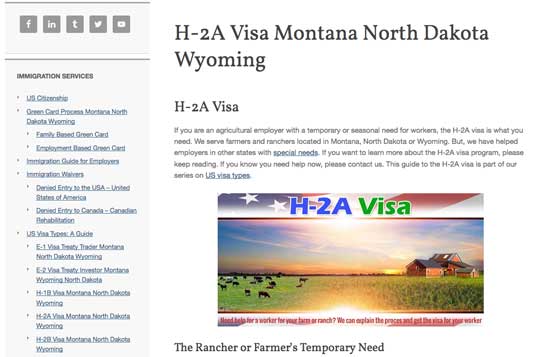
H2A visa? Well, that is what a lot of people type when looking for information on the visa for temporary agricultural workers. But, some people look for information on that visa using the term that the government uses, H-2A. People using different terms to search for the same thing present a problem for the person wanting to reach people with information. Google does not seem recognize H2A and H-2A as being the same thing.

H2A Visa

H2A Visa Solution

It wouldn’t make any sense to copy all the content over from my article on the H-2A visa in our guide to US visa types to a new page about the H2A visa. Google would probably penalize us for duplicate content. So in creating this post, I am pointing you to good information on the visa for temporary agricultural workers, our article on H2A visas in the guide.

How We Can Help

If your farm or ranch is located in Montana, North Dakota, Wyoming and you need temporary help, we can help with an H2A visa application. Please contact us.

Filed Under: Blog

Check Visa Status

January 13, 2015 by Admin-ILM

How do you check visa status? A lot of different visa types require that you first make an application to the USCIS here in the United States to get an approval. If the beneficiary of the visa application, the person who will receive the visa, is not in the United States the approval is then transferred to the US Consulate with jurisdiction over the beneficiary. The beneficiary is then required to apply for the visa. [Read more…] about Check Visa Status

Filed Under: Blog Tagged With: check on visa status, check visa, check visa status, how to check visa status, visa center check status, visa check

Immigration Law of Montana’s YouTube Channel

December 31, 2014 by Admin-ILM

Previously, we did a blog post on Immigration Law of Montana’s social media sites, but neglected to include information on Immigration Law of Montana’s YouTube channel. We don’t have much yet, but plan more videos soon. Right now, all we have are a couple of videos on how to use the system that we use to process your immigration cases, LawLogix. The system is pretty self-explanatory, but for someone who does not have much familiarity with Internet-based forms it may prove more challenging, hence the videos. [Read more…] about Immigration Law of Montana’s YouTube Channel

Filed Under: Blog Tagged With: youtube channel

Immigration Law Of Montana Hours – 24/7 Kind Of

December 23, 2014 by Admin-ILM

Immigration Law of Montana hours, 24/7 now? Kind of! With the arrival of the Internet as the method that most people use to search to find immigration lawyers today, and with the development of our 21st century 24/7 culture, Immigration Law of Montana, P.C. is pleased to announce that we are making it easier for our clients and potential clients to contact us outside regular business hours.  [Read more…] about Immigration Law Of Montana Hours – 24/7 Kind Of
Filed Under: Blog Tagged With: 24/7, after hours service, Immigration Law of Montana hours, text message, voice mail

USCIS Courier Services – Policy Change

December 23, 2014 by Admin-ILM

USCIS Courier Services? No matter how time sensitive your application to the USCIS, the USCIS has traditionally had a one-size-fits-all approach to providing evidence of your success or failure in seeking the benefit: your approval or denial notice arrived in a first-class mail envelope. Attorneys and other organizations filing large volumes of time sensitive applications have long requested that the USCIS enable the petitioner for the benefit to include a means of signing the approval notice back to the petitioner. In a recent press release, the USCIS announced that it has changed its policy. Petitioners may now include a prepaid air bill by the usual courier services, UPS and FedEx, that the USCIS will now use to return the original approval notice. [Read more…] about USCIS Courier Services – Policy Change

Filed Under: Blog Tagged With: Courier Services, FedEx, policy change, UPS, USCIS, USPS

  • « Go to Previous Page
  • Page 1
  • Page 2
  • Page 3
  • Page 4
  • Page 5
  • Go to Next Page »

Footer

Our Location

We are located about 20 minutes NE of Billings in a rural community:

Immigration Law of Montana, P.C.
8400 Clark Rd
Shepherd, MT 59079
406-373-9828

Affiliations

Montana State Bar

AILA Member


Social

  • Facebook
  • LinkedIn
  • Tumblr
  • Twitter
  • YouTube
  • Immigration Lawyer Montana
  • Privacy Policy
  • Disclaimer
  • Terms of Service
  • Site Map
  • Contact Us

COPYRIGHT © 2025 Immigration Law of Montana · All Rights Reserved

  • English
  • Español